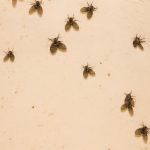

Have you noticed tiny, fuzzy, moth-like insects hovering around your bathroom sink, kitchen drain, or shower? If so, you are likely dealing with an infestation of Psychodidae, commonly known as drain flies, sewer flies, or filter flies.
While they don’t bite or sting, these persistent little pests lay their eggs in the slimy organic matter that builds up inside drains. If you do find yourself in this situation, you need to act fast. Leaving them alone can lead to a massive population boom and may point to an underlying plumbing issue.
Before tackling the problem, you need to make sure you are dealing with the right pest.
Check for these characteristics:
- Does it have six legs, a pair of wings, and antennae?
- Is it about 1–5mm long?
- Is it grey or tan-coloured, with lighter wings?
- Is the body covered in fuzzy, moth-like hairs?
- When not flying, do the wings fold flat over the body?
- When crushed, are you left with a powdery, white smudge?
If this sounds like the culprit, you are dealing with drain flies. While they aren’t dangerous themselves, the bacteria, microorganisms, and other nasties they carry around from decomposing waste can be seriously unhygienic for your family. Besides this, ignoring them may mean you’ll need to call on blocked drain cleaning services in the future. Why? Because they feed on the very gunk, grease, and hair that is threatening to choke your pipes.
According to public health data and environmental guidelines on water quality from health.gov.au, maintaining sanitary, free-flowing wastewater systems is essential to preventing pest-borne bacteria from contaminating your living spaces. Knowing how to get rid of drain flies as quickly and thoroughly as possible is therefore crucial.
Here is how to go about getting rid of drain flies:
Resume activities
Drain flies can so often be spotted in and around your sinks, showers, and other drains and plumbing outlets after you’ve been away on holiday, or in guest rooms and rarely used ensuites. The reason? They prefer stagnant water and untouched drains much more than active ones. If the infestation is incredibly minor, the drain flies are often moved on naturally once you simply start using those taps and showers consistently again, flushing out their resting spots.
Identify the source
If the drain flies aren’t going away with everyday use, it’s time to investigate deeper. That’s because they may actually be attracted by something else, like rotting fruit elsewhere around your property, so clean up any nearby food sources first.
If the source is definitely a drain (often the case with a slow-draining or blocked sink), consider covering it up to temporarily confirm the incursion. If you place a small cup or plastic lid lightly coated in vegetable oil or petroleum jelly over the drain overnight, the emerging drain flies will stick to it, confirming exactly which pipe they are calling home.
Mix up a brew
For those drain flies that are already living it up inside your home, grab a bowl and concoct a simple, non-toxic DIY trap. Mix together a brew of:
1 part sugar
1 part water
1 part white vinegar
A few drops of liquid dish detergent
Leave the bowl right next to the affected drain overnight. The sweet scent of the vinegar and sugar attracts the flies, while the dish soap breaks the surface tension of the liquid, causing them to sink and drown.
Boil the kettle
Drowning the sewer flies in a torrent of boiling hot water is also an effective way of reminding them that they’re not welcome at your place. If you carefully pour a kettle or two of boiling water down the drain once a day for a few consecutive days, the heat will destroy the organic biofilm where they lay their eggs. This simple trick also helps to flush out minor build-ups of oil, grease, and muck before they turn into major blockages.
Note: In 2026, professional drain care has moved away from harsh, corrosive chemical drain cleaners, which damage modern PVC pipes and harm the environment. Instead, if boiling water doesn’t work, consider using a natural microbial or enzyme-based bio-cleanser that safely eats away the organic slime without corroding your plumbing layout.
Do you have a leak?
Often, the thing that keeps drawing drain flies back to a property is a small, hidden pipe leak behind walls or under floors. The constant moisture creates the perfect structural breeding ground, allowing them to follow the plumbing route straight up to your fixtures.
In this case, a professional water leak detection and burst pipe inspection is the best course of action. Sometimes, a phenomenon like the presence of drain flies is actually the symptom of a deeper plumbing problem that has otherwise escaped your attention.
Brisbane’s drain experts can fix your drain fly problem
If you’re struggling with a persistent drain fly infestation and suspect an underlying blockage or structural pipe leak could be the cause, it’s time to get some experienced, trained, and fully licensed Brisbane plumbers on the case.
Thinking of getting professional help to clear your pipes for good? Speak to the experts at Brisbane Plumbing & Drainage. We are the masters of all issues relating to your drains, pipes, and everyday plumbing systems, backed by the very best people and the latest high-tech diagnostic gear.
Give your drain fly problem the flick by calling us on 1300 616 203 or getting with our friendly team to book your service today!